A Regulatory Watershed for Autonomous Fleets
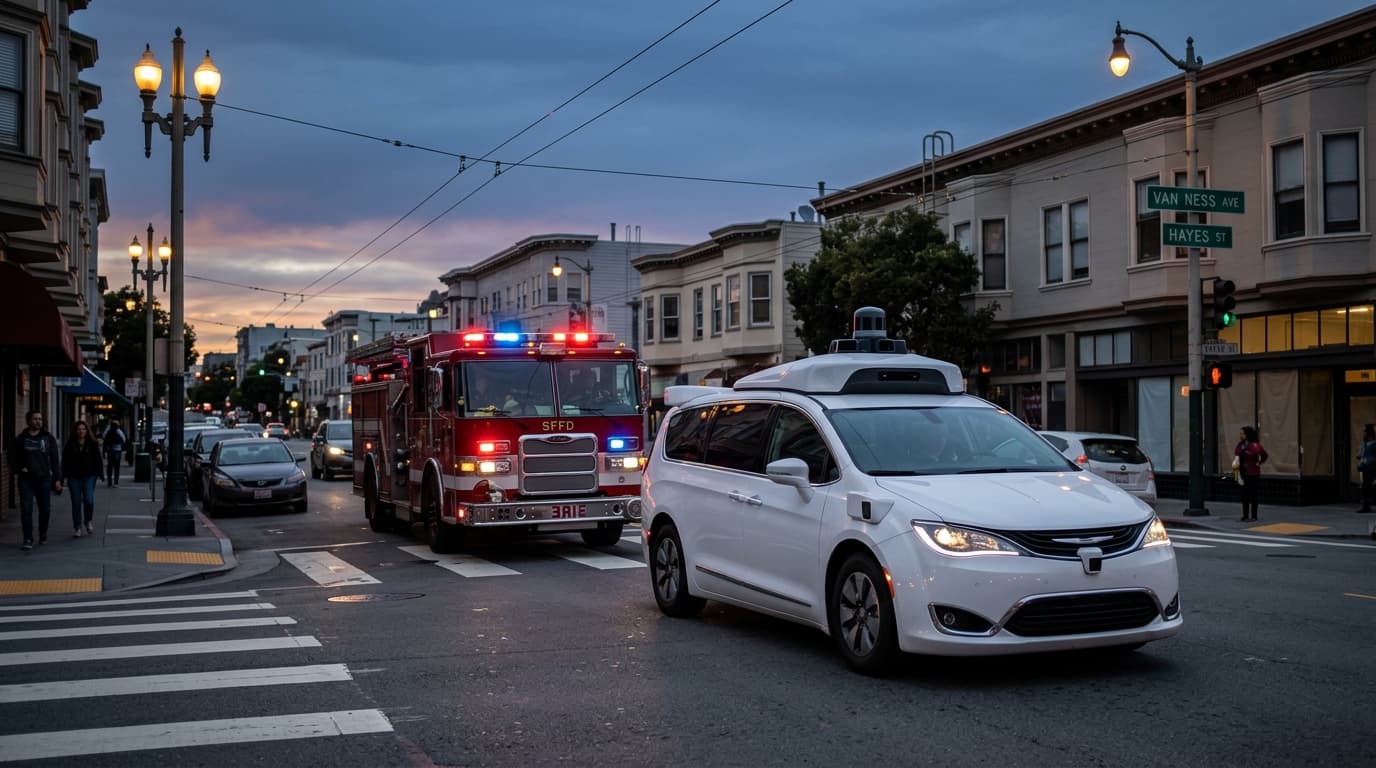
The commercial deployment of autonomous vehicles has reached a critical regulatory reckoning. California Governor Gavin Newsom has signed into law Senate Bill 1246 (SB 1246), introducing strict operational responsibilities for autonomous vehicle developers including Waymo, Zoox, and Tesla. The legislation directly addresses widespread municipal friction across cities like San Francisco, where stranded driverless cars repeatedly obstructed emergency responders, fire trucks, and police operations.
Historically, the oversight of autonomous fleets was predominantly concentrated within state-level entities such as the California Department of Motor Vehicles (DMV). SB 1246 reshapes this balance by granting municipal authorities immediate enforcement power, enabling cities to penalize operational failures that compromise public safety and emergency corridors.
Stringent Fines and Mandated Physical Presence
The primary enforcement mechanism of SB 1246 authorizes local penalties of up to $10,000 per vehicle when a driverless car impedes police, firefighters, or emergency medical personnel for more than 30 minutes. This financial deterrent forces operators to treat street-level blockages as acute operational emergencies rather than algorithmic edge cases awaiting remote clearance.
Crucially, the legislation mandates that operators employ physical 'local incident technicians' stationed within service areas to manually clear blocked vehicles. In addition, remote tele-assist drivers must reside within the United States and hold valid U.S. driver's licenses, prohibiting the offshore outsourcing of safety-critical teleoperation workflows.
Operational Vulnerabilities in Urban Environments
The friction between Level 4 autonomy and unpredictable municipal realities stems from systemic factors. Cellular connection blackouts, informal construction detours, and manual traffic signals by emergency responders often trigger conservative fail-safe stops. While stopping safeguards the vehicle, it frequently leaves narrow urban thoroughfares completely gridlocked.
Incident reviews reveal that prolonged blockages predominantly arise from the absence of rapid in-person response teams rather than unrecoverable mechanical failures.
Breakdown of Compliance and Operational Overhead
Meeting the mandates of SB 1246 necessitates a structural recalibration of autonomous fleet unit economics. Deploying rapid-response ground crews across urban service zones adds substantial operational expenditure that pure-play software models previously minimized.
Furthermore, operators must now build resilient telemetry bridges to report vehicle positions and operational statuses directly to city traffic management centers, especially during wide-scale network blackouts or central server degradations.
- Indicative breakdown of operational resources required to comply with SB 1246 requirements.
Lessons for Barcelona and European Living Labs
As California establishes stringent boundaries following extensive open-road testing, European metropolises are taking notice. Cities like Barcelona, leveraging urban Living Labs and municipal mobility testbeds, are positioned to internalize these operational lessons before initiating large-scale commercial deployments.
The European urban fabric—characterized by dense historical quarters, pedestrian superblocks, and dedicated transit corridors—presents even greater spatial constraints than typical American street grids. Initiatives deploying autonomous shuttles in areas such as Barcelona's 22@ innovation district or the Port of Barcelona must recognize that direct interoperability with local police (Guàrdia Urbana) and emergency dispatchers is a core operational requirement.
Self-Assessment: Urban Fleet Operational Readiness
Mobility operators and urban transit planners must evaluate their preparedness against emerging municipal governance and emergency-response accountability standards.
Use this strategic diagnostic tool to assess the operational resilience of your autonomous fleet initiative.
Does your operational model maintain physical incident response within 15 minutes?
The Horizon for Sustainable Autonomous Mobility
The enactment of California's SB 1246 dismantles the assumption that driverless mobility can scale independent of local public governance. The industry is entering a more mature phase where perception software excellence must be backed by tangible human support and institutional cooperation.
For Barcelona, Catalonia, and European mobility leaders, this regulatory shift serves as a blueprint: the true benchmark of commercial Level 4 autonomy is not merely zero-collision driving, but seamless integration with the emergency services that protect urban communities.
“Autonomous algorithms cannot operate decoupled from municipal infrastructure: real-time local integration is now an operational mandate.”