Frontier model evolution
On November 9, 2026, Anthropic announced Claude Fable 5.2 alongside Claude Mythos 5.2, setting a new operational benchmark for frontier models applied to professional software engineering. The model family achieved a score of 65 on the Artificial Analysis Intelligence Index v5, securing leading rankings across demanding coding evaluations and algorithmic problem-solving tests.
Rather than solely pursuing marginal gains on basic synthetic coding prompts, the 5.2 release tackles two persistent hurdles for enterprise adoption: aggregate token costs during broad code sweeps and execution latency. Featuring a 30% increase in inference throughput, this release is architected to sustain long-horizon autonomous workflows without interrupting active delivery schedules.
Cost dynamics and inference efficiency
Anthropic's updated price structure places Claude Fable 5.2 at $8 per million input tokens and $40 per million output tokens, reflecting a net 20% reduction compared to the 5.1 generation. This aggressive repositioning intensifies competitive pressure across the frontier landscape, pricing the model below direct competitors such as GPT-6 Astra for deep analytical tasks.
This pricing shift stems from architectural efficiency rather than compromised capability, granting engineering leads the budget headroom needed to execute large-scale automated audits and test generation. For organizations processing billions of tokens per month across CI/CD environments, the decrease produces substantial operational savings immediately.
Benchmarking engineering tasks
The interaction between technical precision, response speed, and token cost determines whether complex tasks can be safely delegated to artificial intelligence. Across multi-file refactoring and automated error diagnosis, Fable 5.2 shows a marked increase in task completion rates per dollar invested relative to preceding model generations.
Engineering organizations are shifting away from evaluating isolated code completions, focusing instead on whether a system can systematically resolve circular dependencies, validate regression suites, and interpret complex architectural documentation without introducing regressions.
Multi-agent coordination and hardware
The core technical differentiator in version 5.2 lies in its capability to coordinate sprawling agent networks. The model can orchestrate upward of 1,000 subagents concurrently, enabling organizations to execute full-scale architectural migrations across sprawling monorepositories containing millions of lines of code within unified runs.
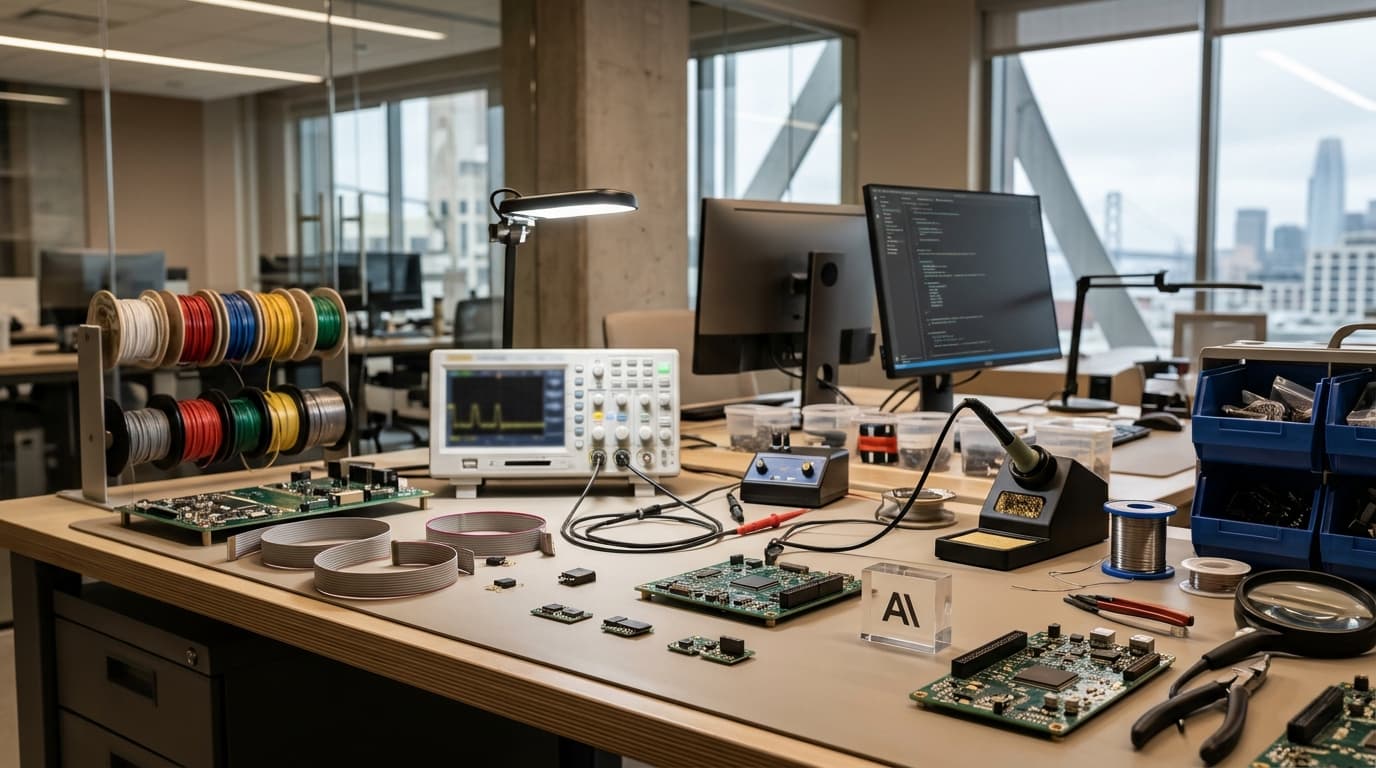
Additionally, Anthropic has broadened the system's operational reach into physical engineering by allowing Claude Fable 5.2 to interpret schematics and prototype hardware circuits directly inside professional CAD environments. This bridge between logic and physical hardware design unlocks practical applications across automotive R&D, industrial automation, and connected medical device engineering.
Task allocation within agent workflows
In production multi-agent architectures, execution effort is heavily segmented. Effective autonomous problem decomposition requires subagents to dedicate substantial computational bandwidth to environmental discovery and formal testing before committing any persistent change to the main branch.
This structured workflow dampens the risk of silent bugs and guarantees that every pull request generated by an agent arrives accompanied by verified regression tests, relieving senior technical leads from tedious verification cycles.
- Indicative distribution of computational consumption across complex multi-agent engineering workflows.
Enterprise data retention and compliance
For tech enterprises in Barcelona and across the wider European Union, deploying advanced autonomous models hinges on data privacy guarantees. Anthropic has addressed these enterprise requirements by pairing Claude Fable 5.2 with Zero Data Retention (ZDR) compatibility under its Enterprise Frontier Safeguards program, ensuring that customer codebases, proprietary diagrams, and internal context are neither stored nor utilized for future training iterations.
This safeguard allows European scale-ups operating in heavily regulated sectors—including fintech, insurtech, and healthcare—to connect deep proprietary repositories to external model endpoints while upholding GDPR compliance and institutional confidentiality agreements.
Multi-agent readiness assessment
Delegating large modernization initiatives to autonomous agent swarms presupposes robust CI/CD pipelines, comprehensive observability, and clear access controls. Without rigorous test infrastructure, scaling subagent activities can strain deployment pipelines and complicate version control.
Determine your engineering organization's readiness to integrate autonomous frontier models like Claude Fable 5.2 through this brief evaluation:
What is the level of automated test coverage across your core codebases?
Strategic horizon for European IT
The alignment of tangible price cuts with long-horizon reasoning models marks an inflection point for the European software industry. As the unit economics of reading, analyzing, and rewriting vast codebases drop below critical friction thresholds, modernizing legacy systems transforms from multi-quarter liabilities into high-tempo automated projects.
When late 2026 closes, market-leading technology consultancies and tech-enabled enterprises will not be defined by whether their developers use code completion, but by their ability to direct synchronized agent swarms within audited architectural boundaries. At basebcn, we anticipate that sustained competitive edge will depend on formulating precise technical specifications and strict governance structures that make enterprise-grade autonomous engineering viable at scale.
“Steeper cost curves paired with the orchestration of massive subagent fleets move autonomous engineering from experimental sandboxes into continuous enterprise modernization.”