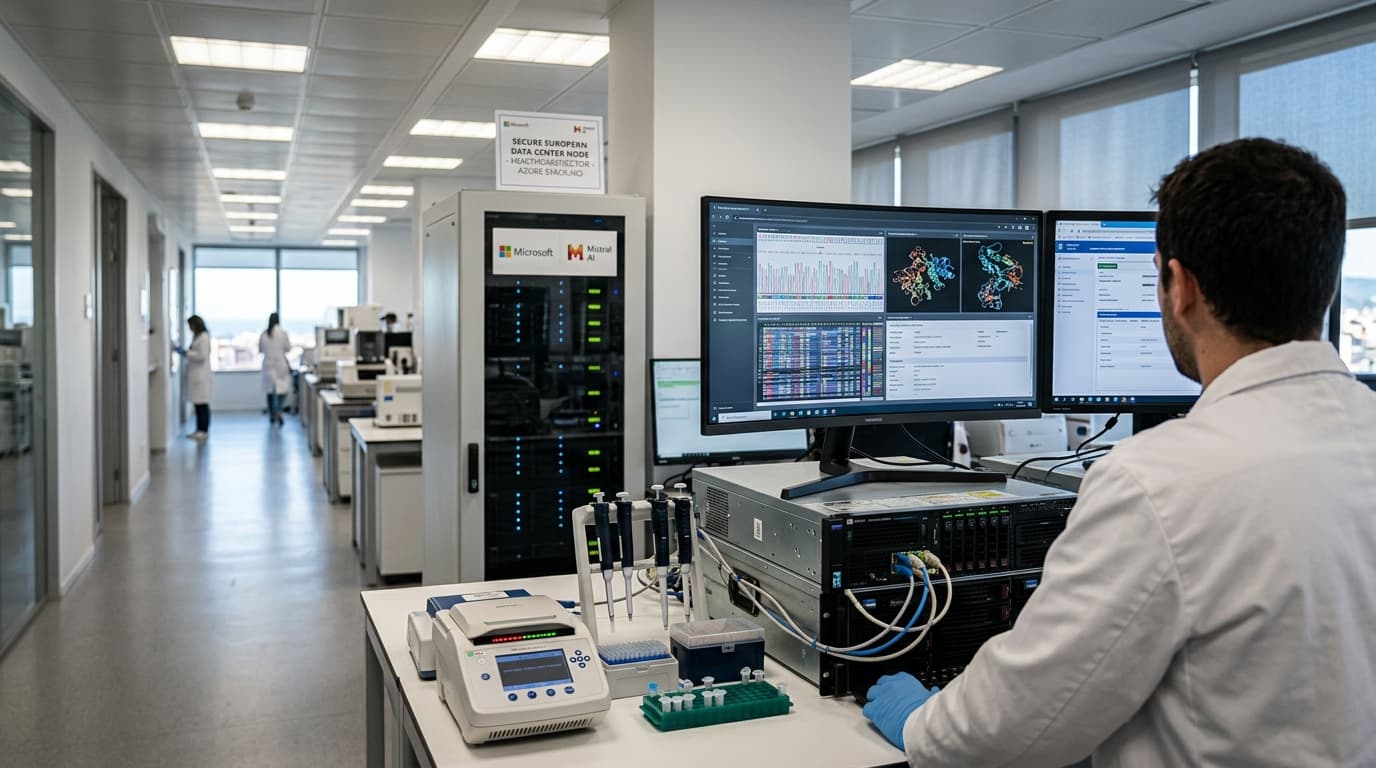
A Strategic Boost for European AI
On July 21, 2026, Microsoft and Mistral AI announced a significant expansion of their strategic partnership, marking a pivotal moment in Europe's artificial intelligence landscape. This multibillion-dollar agreement not only underscores both companies' commitment to innovation but also sets a clear direction for democratizing frontier AI for European enterprises, with a particular focus on highly regulated sectors. The collaboration aims to address the inherent complexities of implementing AI solutions in environments where data privacy, security, and sovereignty are paramount.
The essence of this alliance lies in the deep integration of Mistral's efficient AI models into Microsoft's robust platforms, including Azure, Copilot Studio, and Microsoft Foundry. This integration will enable European organizations to access advanced AI capabilities with unprecedented flexibility, adapting to diverse operational needs and compliance requirements. The goal is to empower businesses, from startups to large corporations, to harness the transformative power of AI securely and controllably, driving innovation and efficiency across their respective industries.
Frontier AI for Regulated Industries
The primary focus of this expanded partnership is on regulated industries, where AI adoption has traditionally been more cautious due to stringent regulations and the need for impeccable data governance. The healthcare sector, in particular, stands to benefit immensely from this initiative. The ability to deploy Mistral models across various environments, from cloud-scale to fully disconnected, while maintaining data sovereignty and privacy, is a key differentiator. This means hospitals, clinics, and pharmaceutical companies can leverage AI to improve diagnostics, optimize treatments, and streamline administrative processes, without compromising patient confidentiality or data integrity.
The promise of greater choice, control, and operational consistency is vital for these industries. The alliance seeks to provide the necessary tools for organizations to innovate with AI while adhering to regulations such as GDPR and upcoming AI Acts. By offering solutions that ensure operational resilience and the ability to keep data within European borders, Microsoft and Mistral AI are laying the groundwork for more secure and trustworthy AI adoption in sectors where the technology's impact can be most profound and critical.
Strengthening European AI Infrastructure
A crucial component of this agreement is Microsoft's commitment to leveraging Mistral's expanded Europe-based GPU infrastructure to boost AI compute capacity for its cloud and AI services. This direct investment in European infrastructure is a fundamental pillar for supporting the "European Digital Commitments" and reducing reliance on external infrastructures. For Europe, this represents a significant step towards achieving greater digital autonomy and fostering a more robust and self-sufficient AI ecosystem.
The increased AI compute capacity will not only benefit Microsoft Azure users but also drive AI research and development across the continent. More powerful and accessible infrastructure is essential for European developers, researchers, and businesses to innovate on par with their global counterparts, fostering the creation of new AI-powered applications and services that address the specific needs of the European market. This positions Europe as a key player in the global race for AI supremacy.
Implications for Barcelona and European Tech Hubs
For cities like Barcelona, which has cemented its reputation as a vibrant tech and AI hub, this collaboration between Microsoft and Mistral AI is excellent news. The investment in AI infrastructure and the focus on regulated sectors such as healthcare open up a wealth of opportunities for localized AI application development and the creation of innovative solutions. Barcelona-based companies and startups specializing in digital health, biotechnology, and fintech will find a more fertile ground to integrate frontier AI into their operations, with the confidence that the highest standards of privacy and security are met.
Furthermore, the availability of more robust and controlled AI infrastructure within Europe will foster the retention and attraction of talent on the continent. Developers, data scientists, and AI engineers in Barcelona and other European cities will have access to state-of-the-art tools and platforms, boosting innovation and competitiveness. This scenario is conducive to the growth of the local AI ecosystem, generating high-skilled employment and positioning the region as a benchmark in the ethical and secure application of AI.
- Indicative figures representing the distribution of AI application opportunities across regulated sectors in Europe, not official statistics.
Challenges and Opportunities in AI Adoption
While the alliance opens new avenues for AI adoption, it also highlights persistent challenges. The complexity of regulations, the need for skilled personnel, and the integration of legacy systems remain hurdles. However, the promise of greater choice and control over AI models and their deployment, coupled with the assurance of data sovereignty, offers a clear path to overcome these barriers. Businesses now have the opportunity to design AI architectures that are not only powerful but also inherently secure and compliant.
The integration of Mistral models into platforms like Copilot Studio means enterprises can create tailored, secure AI experiences for their employees and customers, while maintaining control over the underlying data. This is particularly relevant in the healthcare sector, where personalization of care and operational efficiency can significantly improve patient outcomes. The ability to build custom AI solutions, with the flexibility to deploy them in the cloud or on-premises, is a game-changer for innovation in such a critical sector.
Assessing Readiness for Secure AI
The expansion of this partnership underscores the growing need for organizations to assess their readiness to adopt secure and compliant AI solutions. It's not just about having access to technology but about having the right strategy, data governance, and organizational culture in place to implement it effectively. Businesses must consider how their current data privacy frameworks align with the offered data sovereignty capabilities and how they can upskill their workforce to leverage these new tools to their fullest potential.
For organizations operating in regulated sectors, the opportunity to collaborate with technology partners who prioritize security and compliance is invaluable. This agreement between Microsoft and Mistral AI provides a blueprint for future collaborations that seek to balance innovation with responsibility, ensuring that the advancement of AI benefits society in an ethical and sustainable manner. Readiness for secure AI is an ongoing journey that requires constant evaluation and strategic adaptation.
Does your organization have a clear strategy for AI data governance?
The Future of AI in Europe
The alliance between Microsoft and Mistral AI is not just a commercial agreement; it's a statement of intent about the future of AI in Europe. By prioritizing data sovereignty, privacy, and operational resilience, they are setting a precedent for AI development and deployment on a continent that deeply values these principles. This strategic approach will not only benefit enterprises in regulated sectors but also inspire broader confidence in AI, fostering wider and more responsible adoption.
As AI continues to evolve, the ability for enterprises to control their models and data will become increasingly critical. This collaboration provides a roadmap for achieving that control while harnessing the power of frontier AI. For Barcelona and other European innovation hubs, this signals a promising future, where AI is not just a tool for progress but also a driver for a more secure, ethical, and sovereign digital economy.
“This collaboration is a pivotal step in strengthening data sovereignty and operational resilience for European AI, especially within healthcare.”