Google's Commitment to Educational AI
Google's recent announcement marks a significant pivot in the integration of artificial intelligence into educational systems, particularly across K-12 and higher education in the U.S. This strategic move by a tech giant underscores a global trend towards leveraging AI to transform learning environments, offering personalized experiences and enhancing teaching methodologies. The initiatives, centered around Gemini integrations, personalized study tools, and extensive AI literacy training, are poised to impact millions of educators and students, setting a precedent for how technology can reshape the future of education.
Google's Comprehensive AI Initiatives
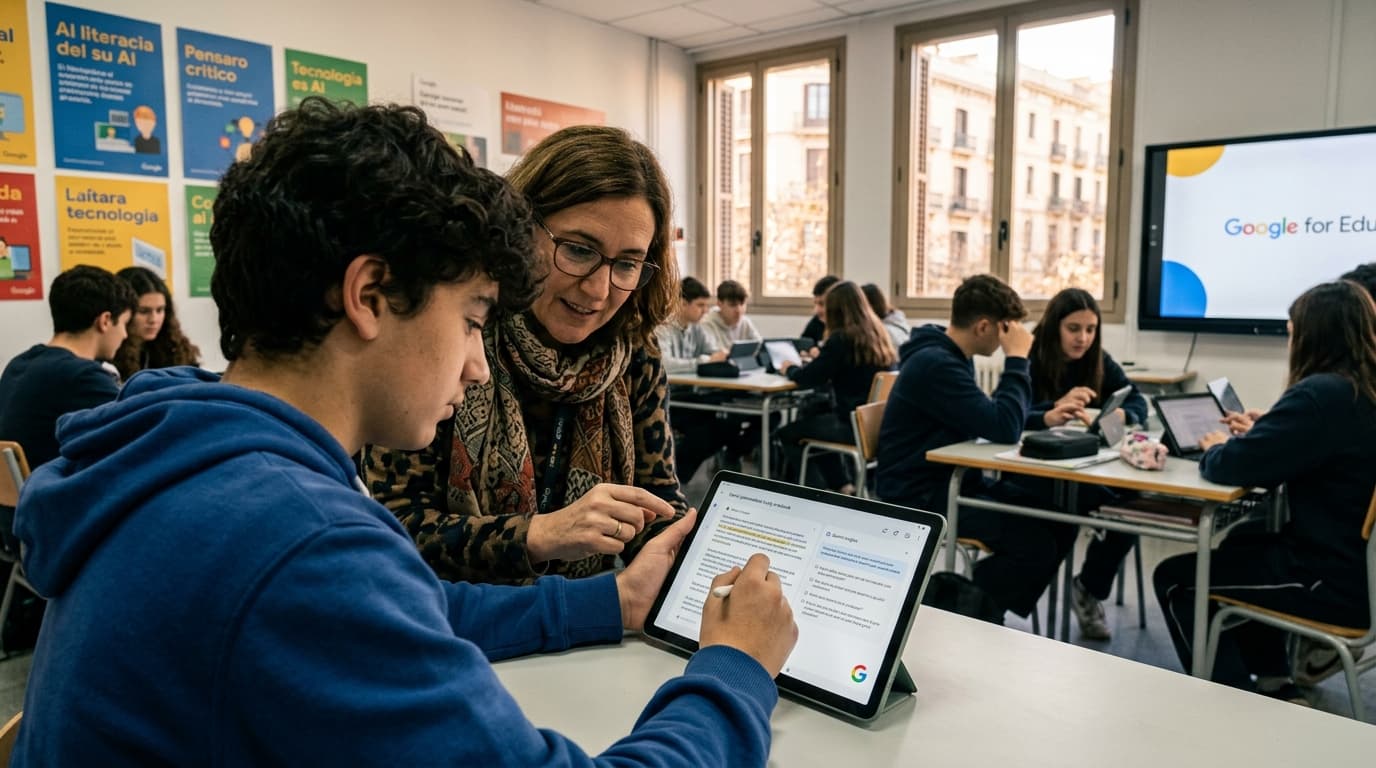
At the core of Google's strategy is the deep integration of its Gemini AI into Google Classroom. This aims to empower teachers by streamlining administrative tasks, assisting with assignment preparation, and providing intelligent support for classroom management. Beyond operational efficiencies, Google is introducing Personalized Study Notebooks, powered by Gemini, designed to deliver adaptive lessons and quizzes that dynamically adjust to individual student performance and learning pace. This personalized approach promises to cater to diverse learning styles and academic needs.
Further expanding its reach, Google has partnered with The Princeton Review to offer no-cost practice tests for the ACT and GRE, directly addressing a critical need for accessible test preparation resources. This initiative not only democratizes access to high-quality study materials but also highlights AI's potential in breaking down barriers to academic advancement. Crucially, Google is launching a comprehensive AI literacy training program targeting all 6 million K-12 and higher education faculty in the U.S., aiming to equip them with the skills to safely and thoughtfully utilize AI tools like Gemini and NotebookLM, thereby preparing 74 million students for an AI-driven future.
Transforming U.S. Educational Landscapes
The rollout of these initiatives in the U.S. represents a substantial investment in the future of education, with potential to significantly enhance learning outcomes and teacher efficacy. By automating routine tasks, Gemini allows educators to dedicate more time to pedagogical innovation and direct student engagement. Personalized Study Notebooks, meanwhile, move beyond one-size-fits-all curricula, offering a tailored educational journey that can identify and address individual student strengths and weaknesses. This shift towards adaptive learning promises to foster deeper understanding and improve retention rates across various subjects.
However, the successful implementation of such widespread AI integration will hinge on several factors, including robust infrastructure, equitable access to technology, and continuous professional development for educators. Addressing potential biases in AI algorithms and ensuring data privacy will also be paramount. Google's commitment to AI literacy training is a vital step in this direction, aiming to cultivate a generation of educators who are not just users but informed facilitators of AI-enhanced learning, capable of guiding students through the ethical and practical considerations of these powerful tools.
A Call to Action for European Education
Google's ambitious foray into U.S. education serves as a compelling case study and a potential blueprint for other regions, particularly Europe. European educational institutions and governments, including those in Barcelona and across Spain, are increasingly recognizing the imperative to integrate AI into their learning environments. The focus extends beyond mere technological adoption to fostering genuine AI literacy among students and educators alike. This involves not only understanding how to use AI tools but also comprehending their underlying principles, ethical implications, and societal impact.
The challenge for Europe lies in developing coherent, continent-wide strategies that balance innovation with regulatory prudence, ensuring that AI integration aligns with European values of privacy, equity, and human-centric design. Initiatives like Google's highlight the need for significant investment in teacher training, curriculum development, and the creation of adaptive learning platforms that can cater to the diverse linguistic and cultural landscapes of the continent. The goal is to prepare European citizens for a future where AI proficiency is not just an advantage but a fundamental skill.
Barcelona and Spain: Charting an AI-Driven Educational Future
Within Spain, and particularly in innovation hubs like Barcelona, there is a growing momentum to explore and implement AI solutions in education. Universities and tech centers in Catalonia are already engaging in pilot programs and research initiatives aimed at understanding the best practices for AI integration. The city's vibrant tech ecosystem provides a fertile ground for developing localized AI tools and pedagogical approaches that can complement broader national strategies. The Spanish government, too, is exploring frameworks to support digital transformation in education, with AI playing a central role.
However, scaling these efforts nationwide requires coordinated policy-making, substantial public and private investment, and a concerted effort to bridge the digital divide. Learning from Google's comprehensive approach, Spain could prioritize large-scale educator training programs, develop national guidelines for ethical AI use in schools, and foster partnerships between educational institutions and AI developers. The aim is to ensure that every student, from primary school to university, has the opportunity to develop critical AI skills and benefit from personalized learning experiences.
- Representative distribution of estimated investment, not verified financial data.
Strategic Implications for the EdTech Market
Google's move is not just an educational initiative; it's a strategic play in the burgeoning EdTech market. By embedding Gemini into core educational platforms like Google Classroom, the company reinforces its ecosystem dominance and sets a high bar for competitors. This development signals a clear shift towards AI-first educational tools, prompting other technology providers and startups to accelerate their own AI integration strategies. The emphasis on personalized learning and AI literacy also opens new market segments for specialized content creators, training providers, and ethical AI solution developers.
For educational institutions, this means a wider array of sophisticated tools but also the challenge of navigating a rapidly evolving technological landscape. Strategic partnerships with tech providers, careful evaluation of AI solutions, and a focus on long-term sustainability will be crucial. The investment in educator training is particularly significant, as it addresses a key bottleneck in AI adoption and underscores the human element's irreplaceable role in technology-enhanced learning.
Fostering a Culture of AI Literacy
The success of AI integration in education ultimately hinges on fostering a pervasive culture of AI literacy. This goes beyond mere technical proficiency to encompass critical thinking about AI's capabilities, limitations, and ethical dimensions. Google's commitment to training millions of educators is a testament to this understanding, recognizing that teachers are the frontline facilitators of this new paradigm. By empowering educators, the initiative aims to cultivate a generation of students who are not only adept at using AI but also capable of critically evaluating its outputs, understanding its societal implications, and contributing responsibly to its future development.
For European nations, replicating this scale of AI literacy training will be a monumental but necessary undertaking. It requires national strategies, cross-border collaborations, and a commitment to continuous professional development for all educational stakeholders. The goal is to ensure that AI serves as an enabler of human potential, rather than a mere technological adjunct, preparing students to thrive in an increasingly AI-driven world with confidence and ethical awareness.
Has your institution defined a clear strategy for AI integration in teaching and learning?
Future Outlook: AI as a Cornerstone of Learning
Looking ahead, AI is poised to become an indispensable cornerstone of educational systems worldwide. The initiatives launched by Google are indicative of a broader trend where technology no longer merely supports learning but actively shapes it. From intelligent tutoring systems to data-driven curriculum design and immersive virtual learning environments, AI's potential to revolutionize education is vast. The challenge for institutions and policymakers, particularly in Europe, will be to harness this potential thoughtfully, ensuring that innovation is guided by pedagogical principles, ethical considerations, and a commitment to inclusive access. As AI continues to evolve, so too must our approach to learning, preparing students not just for jobs of the future, but for a future where adaptability, critical thinking, and AI literacy are paramount.
“Google's investment in educational AI underscores a global trend towards transforming learning environments, setting a precedent for the future of education.”