Context and the Promise of AlphaFold 3
DeepMind's AlphaFold 3, the latest iteration of the groundbreaking AI system developed by Google DeepMind and Isomorphic Labs, continues to redefine the landscape of biomolecular structure prediction. Its predecessor revolutionized our understanding of protein folding, and AlphaFold 3 extends this capability to a far broader spectrum of complex biological interactions. New academic research, published in September 2026, has further illuminated its advanced architecture and critical applications, particularly in the accurate prediction of protein-ligand complexes. This ongoing evolution solidifies AlphaFold's position as a cornerstone technology for accelerating scientific discovery.
The ability to precisely model how small molecules (ligands) interact with proteins is fundamental to drug discovery. Traditional experimental methods are often time-consuming and resource-intensive. AlphaFold 3's enhanced predictive power promises to streamline this crucial step, offering researchers unprecedented insights into molecular mechanisms and potential therapeutic targets. This represents a significant leap forward, moving beyond static protein structures to dynamic, multi-component biological systems.
Advanced Architecture and Unprecedented Accuracy
The core innovation behind AlphaFold 3 lies in its sophisticated architecture, which allows it to model complex interactions involving not just proteins, but also DNA, RNA, and various other molecules with significantly improved accuracy. This represents a qualitative shift from earlier models, enabling a holistic view of biological systems. The new research highlights how AlphaFold 3 can now predict the precise binding sites and conformations of drug candidates with a fidelity previously unattainable through computational methods alone, bridging the gap between theoretical prediction and experimental validation.
This unprecedented level of accuracy has profound implications for enhancing our understanding of fundamental biological mechanisms. By predicting how different biomolecules interact, scientists can unravel the intricacies of cellular processes, disease pathways, and genetic regulation. Such insights are vital for basic research, opening new avenues for investigation and hypothesis generation, ultimately accelerating the pace at which new biological knowledge is acquired and validated.
Accelerating Drug Discovery
The direct application of AlphaFold 3's capabilities in predicting protein-ligand interactions is a game-changer for the pharmaceutical industry. By accurately modeling how potential drug compounds bind to target proteins, researchers can rapidly screen vast libraries of molecules, identify promising candidates, and optimize their properties for efficacy and safety. This dramatically reduces the time and cost associated with the early stages of drug discovery, traditionally a bottleneck in bringing new therapies to patients. The ability to perform 'in silico' experiments with high confidence means fewer costly and time-consuming laboratory experiments are needed.
Furthermore, AlphaFold 3 can aid in understanding drug resistance mechanisms by predicting how mutations in target proteins might alter their interaction with existing drugs. This allows for the proactive design of new compounds that can overcome such resistance, or the repurposing of existing drugs for new indications. The acceleration extends beyond just speed; it also encompasses a more informed and targeted approach to drug development, leading to potentially more effective and safer medications reaching the market faster.
- Illustrative distribution of AI's potential impact on different phases of drug discovery, not based on consolidated official data.
Google DeepMind's Innovation Ecosystem
AlphaFold 3 is a testament to Google's broader "AI-for-science" initiative, a strategic commitment to leveraging advanced AI models to drive breakthroughs across various scientific disciplines. This initiative extends beyond structural biology, encompassing areas like healthcare, genomics, materials science, and climate modeling. By investing heavily in foundational AI research and its application to complex scientific problems, Google DeepMind is not only pushing the boundaries of AI but also creating a powerful ecosystem that generates significant societal benefits.
The synergy between DeepMind's fundamental AI research and Isomorphic Labs' focus on drug discovery exemplifies a potent model for scientific innovation. This collaborative approach allows for the rapid translation of cutting-edge AI advancements into practical tools that address real-world challenges. The continuous development and refinement of models like AlphaFold underscore a long-term vision where AI acts as an indispensable partner in scientific exploration, fundamentally altering how research is conducted and discoveries are made.
How mature is your organization's data infrastructure for AI in R&D?
Europe's Strategic Importance in AI Research
The continuous advancements in foundational AI models by global tech leaders like Google DeepMind underscore Europe's critical role in the broader AI research landscape. While the development originates from a global corporation, the impact and collaborative opportunities resonate strongly within European scientific communities. Europe has a rich history of fundamental scientific research and a growing ecosystem of AI talent and innovation. This positions the continent as a crucial partner in both contributing to and benefiting from these global AI advancements.
The strategic importance for Europe lies in fostering an environment where such cutting-edge technologies can be readily adopted, adapted, and further developed by local researchers and industries. This involves investing in AI infrastructure, promoting interdisciplinary collaboration between AI and life sciences, and nurturing a skilled workforce. By actively engaging with and building upon models like AlphaFold 3, European institutions can solidify their position at the forefront of AI-driven scientific discovery, ensuring that the benefits of these innovations are realized locally.
Catalonia: A Life Sciences Epicenter
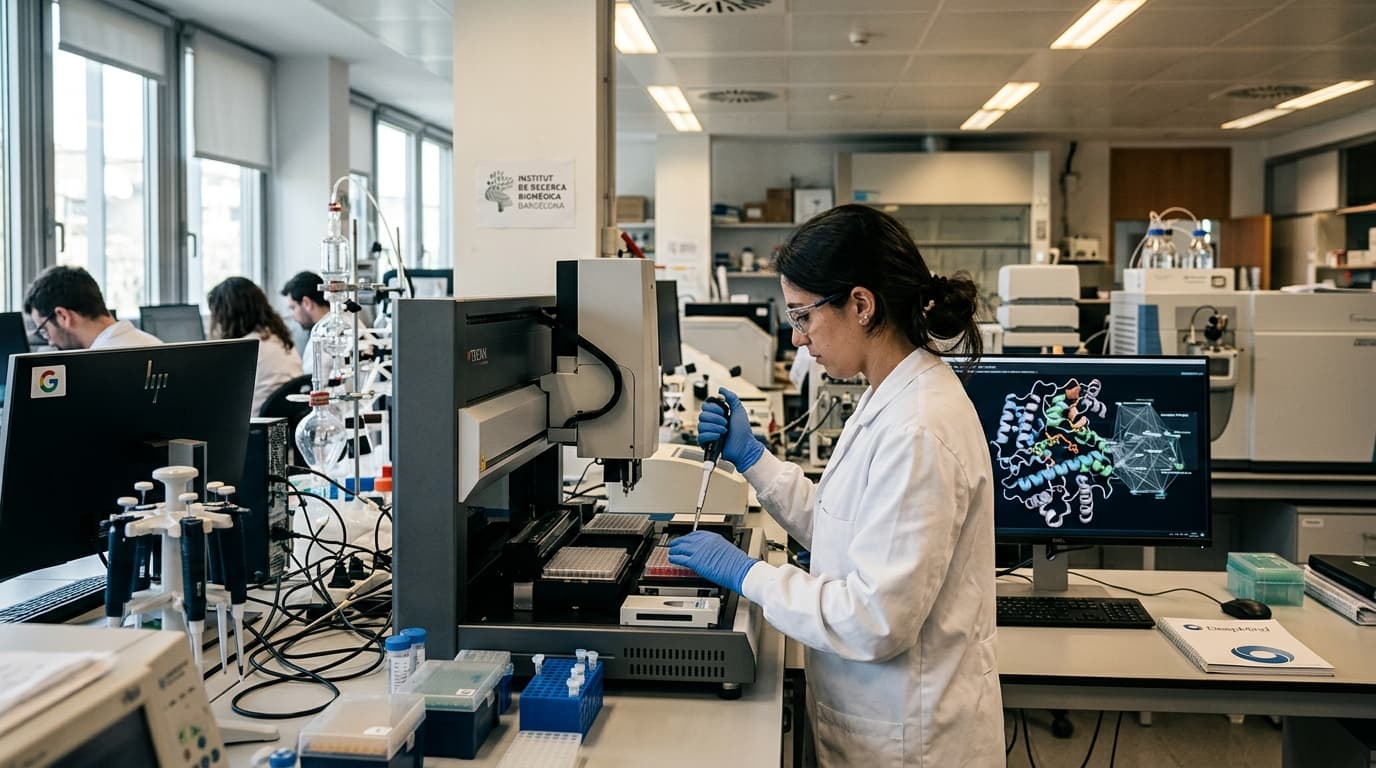
Within this European context, regions with strong life sciences ecosystems, such as Catalonia, stand to benefit immensely from the advancements brought by AlphaFold 3. Catalonia, and particularly Barcelona, has cultivated a vibrant hub for biomedical research, pharmaceutical innovation, and biotechnology. Institutions like the Barcelona Supercomputing Center (BSC), the Institute for Research in Biomedicine (IRB Barcelona), and numerous biotech startups are already at the cutting edge of scientific inquiry, making them prime candidates to leverage AlphaFold 3's capabilities.
The integration of such powerful AI tools can significantly enhance the competitiveness of Catalonia's life sciences sector. Researchers can accelerate their projects, from understanding disease mechanisms to developing novel therapeutics, attracting further investment and talent to the region. This reinforces Barcelona's strategic importance as a nexus where advanced AI meets world-class biomedical research, fostering an environment ripe for groundbreaking discoveries and commercial applications that can benefit global health.
Commercial Implications and Future Challenges
The commercial implications of AlphaFold 3 are far-reaching, impacting pharmaceutical giants, agile biotech startups, and contract research organizations alike. For large pharma, it offers a pathway to de-risk early-stage pipelines and significantly shorten development cycles, leading to faster market entry for new drugs. For smaller biotechs, it democratizes access to advanced structural prediction capabilities, enabling them to compete more effectively with fewer resources. The market for AI-powered drug discovery tools is poised for substantial growth, with AlphaFold 3 setting a new benchmark for accuracy and utility.
However, the widespread adoption of such advanced AI models also presents challenges. These include the need for significant computational infrastructure, the development of highly specialized talent capable of interpreting and utilizing AI outputs, and navigating the ethical considerations surrounding AI in sensitive areas like healthcare. Ensuring data privacy, model interpretability, and responsible AI deployment will be crucial for maximizing the benefits while mitigating potential risks.
Outlook: Towards a New Era of Biology
AlphaFold 3 represents more than just an incremental improvement; it signals a fundamental shift in how we approach biological research and drug discovery. By providing an unprecedented window into the molecular world, it empowers scientists to ask more complex questions and find answers with greater speed and precision. This heralds a new era of biology, one where AI-driven insights complement traditional experimental methods, leading to a deeper, more comprehensive understanding of life itself.
The ongoing development and application of foundational AI models like AlphaFold 3 by global tech leaders will continue to drive research breakthroughs, not just in healthcare but across various scientific domains. For regions like Catalonia, embracing and integrating these technologies will be key to maintaining and enhancing their strategic position in the global scientific and economic landscape, fostering innovation that benefits society at large.
“AlphaFold 3's enhanced precision in modeling biomolecular interactions is set to dramatically accelerate the pace of scientific discovery and drug development.”