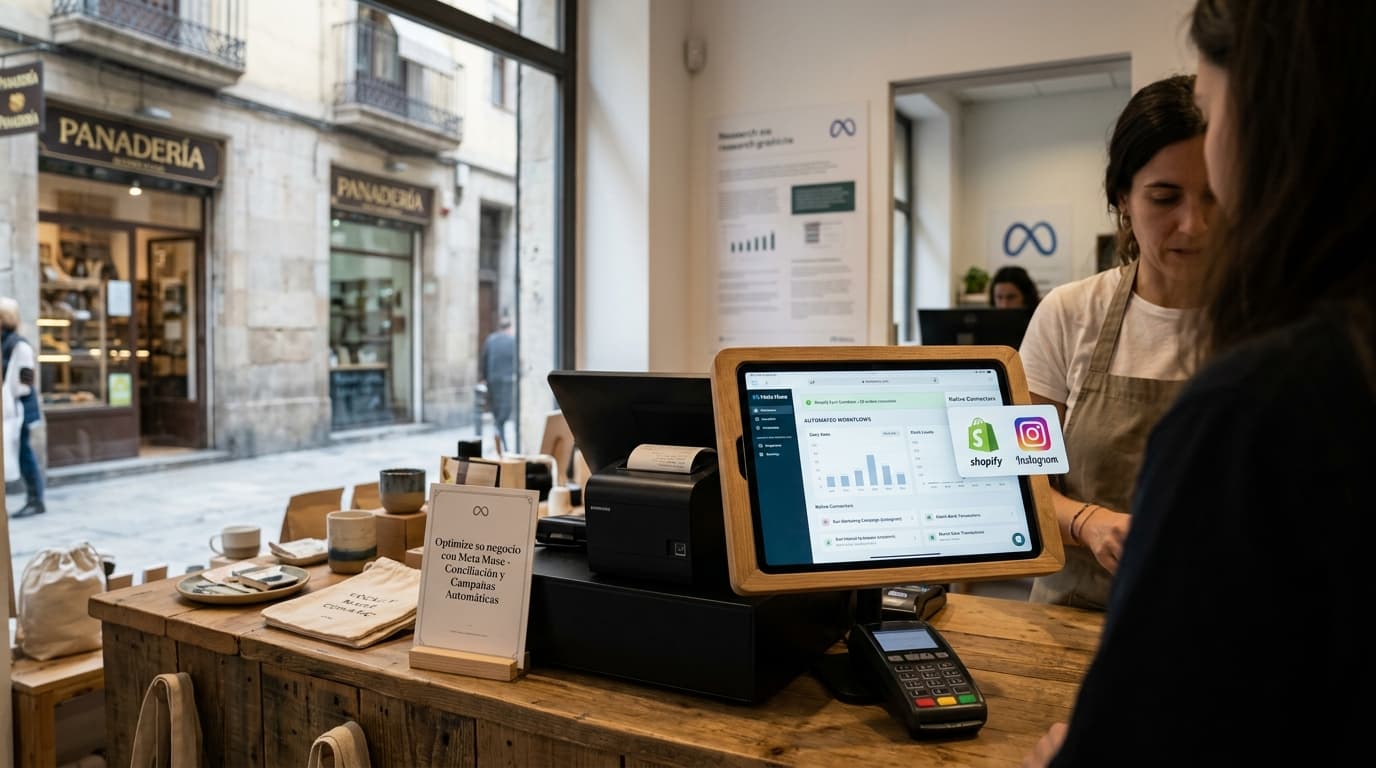
Shifting from conversational assistants to operational execution
On September 29, 2026, Meta announced the rollout of Muse for Small Business, expanding its personal AI agent into autonomous workflow execution tailored specifically to smaller enterprises. Moving beyond conversational chatbots, the platform functions as an active coordinator embedded directly within the day-to-day software stack of small companies.
Historically, small and medium enterprises have struggled with rigid automation pipelines, brittle custom API integrations, or repetitive manual overhead to keep orders, invoicing, and marketing campaigns in sync. With Muse, Meta aims to bridge that operational gap by applying contextual reasoning to routine workflows, enabling the agent to detect operational discrepancies and propose actionable solutions ready for managerial sign-off.
Native connectors with minimal technical friction
The architectural cornerstone of Muse for Small Business is its set of native, few-click connectors. The agent does not require custom middleware or dedicated data engineering: it connects directly with core commercial and operational platforms including Shopify, Stripe, Intuit QuickBooks, Canva, Notion, and Slack, alongside Meta's native Instagram and Facebook business accounts.
This continuous interoperability allows cross-platform orchestration. For instance, when an inventory threshold is breached in Shopify, Muse can draft updated ad sets, adjust expected cash flow forecasts in QuickBooks, and post a structured alert to a logistics Slack channel, unifying fragmented back-office administration into a single workflow.
Mandatory 'Human-in-the-Loop' safeguards
Unchecked autonomy in commercial operations introduces severe financial and reputational hazards. To address this risk, Meta designed Muse around an uncompromising human-in-the-loop governance structure. While the system can synthesize data, identify patterns, and prepare complete execution proposals, it holds no autonomous execution authority over high-stakes actions.
Any operation that publishes public content, initiates customer-facing outreach, or commits financial resources—such as raising ad bids or authorizing ledger disbursements—must receive explicit confirmation from an authorized manager. This deliberate decoupling of operational intelligence from transaction authorization protects businesses against hallucinations and unexpected cash leaks.
Reallocating managerial time in small business teams
In lean teams, administrative friction represents a persistent drag on core business innovation. The proliferation of disconnected SaaS apps often forces founders and operators to spend critical working hours manually copying data between payment gateways, accounting spreadsheets, and campaign dashboards.
By offloading the preparation and staging of these chores to an autonomous agent, business leaders can shift attention toward strategic sourcing, bespoke customer care, and product development, realigning the fundamental unit economics of daily operations.
- Representative breakdown of operational time spent in small retail and service enterprises prior to agentic automation.
Implications for SMEs in Barcelona and Catalonia
Across Catalonia and Spain, where microenterprises and SMEs form more than 95% of the economic backbone, accessible out-of-the-box agents represent a pivotal leveling factor. From neighborhood retailers in Barcelona's Eixample to regional distribution businesses across the Vallès, a lack of dedicated engineering teams has long stalled digital maturity.
Tools like Muse allow local brands to manage omnichannel marketing and inventory synchronization without investing in custom enterprise software. However, success depends on the clarity of the human guidelines established: autonomous workflows accelerate throughput, but they require unambiguous parameters regarding pricing integrity, margin limits, and brand voice.
Readiness assessment: Is your workflow prepared for autonomous agents?
Integrating AI agents into operational workflows is fundamentally a question of process discipline rather than technical wizardry. An autonomous agent will quickly expose and amplify existing organizational disorganization.
Assess how your commercial and financial operations are currently structured to determine whether your business is ready to capture practical value from agentic workflows.
Where does your company currently store its sales and financial data?
Privacy, data sovereignty, and European regulatory compliance
Deploying tools provided by major global technology vendors inside European businesses inevitably intersects with regulatory obligations. Funneling transactional data—from Stripe payment logs and QuickBooks ledgers to customer inquiry records—into external models must comply rigorously with the GDPR and the high standards of the EU AI Act.
SMEs operating in Spain and across Europe must verify that vendor terms guarantee operational data segregation, preventing sensitive commercial metrics from being ingested into public training models. Clear data governance guarantees will remain an indispensable condition for enterprise trust.
Outlook: Cultivating a hybrid workforce for local enterprise
The debut of Muse for Small Business signals that autonomous agents are entering mainstream business reality rather than remaining speculative enterprise prototypes. For local merchants and service firms, competitive advantage will no longer depend on how many clerical hours a team logs, but on how cleanly they define operating rules and oversee automated agents.
As native connectors continue to mature, the capacity to orchestrate multichannel commerce, maintain balanced cash flows, and sustain consistent digital reach will no longer belong solely to well-funded corporations, establishing a more equitable operational baseline for agile SMEs.
“Delegating operations to AI agents is only viable for SMEs if the financial execution boundary remains firmly under explicit human control.”