A problem foreseen two decades ago
Since 2004, long before quantum computing was a practical engineering pursuit, researchers have known about a particularly tricky bottleneck. To run useful programs, a quantum computer needs a specific set of operations, and some of them can only be carried out reliably with the help of so-called magic states.
The catch is that making high-quality, error-corrected magic states is extremely expensive. As Google points out, some estimates suggested that up to 95% of a quantum computer's capacity might have to be devoted to producing them. And each state is used up once consumed, so they have to be generated continuously.
What Google demonstrated
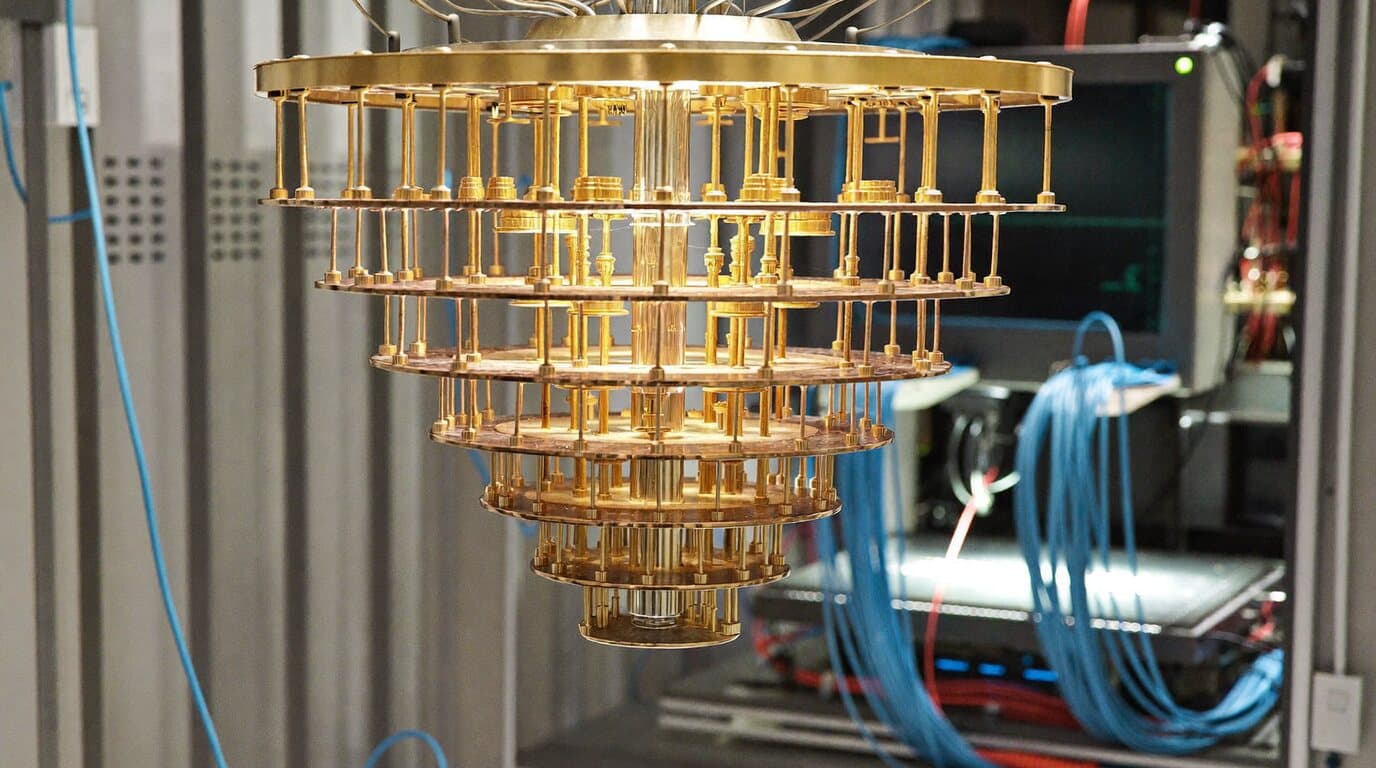
On October 15, Google Quantum AI announced that it has demonstrated magic state cultivation on real hardware, a technique its researchers Craig Gidney, Noah Shutty and Cody Jones proposed in 2024. The work, published in the journal Science, was carried out on Willow, the company's superconducting quantum processor.
The results are striking: cultivation reduced errors by about 40 times compared with uncultivated states and produced T states, a type of magic state, with a record logical fidelity of 99.99%. Google presents it as the first practical demonstration of a solution to one of the field's most severe resource bottlenecks.
How cultivation works
The idea works like a filter. A noisy state is injected into a small region of the chip, and a series of tightly coordinated measurements checks for errors and discards flawed attempts. The ones that pass the filter are grown into a very pure state, which is adapted at the same time into a larger, more useful encoding.
Making it work in practice meant solving unexpected problems. Researcher Emma Rosenfeld spent months looking at data that seemed to defy the laws of physics, until she found that lab noise, caused by electrical equipment drift and temperature changes, was undermining the team's usual measurement technique. The team added extra control to the system and invented a new benchmarking method that uses cultivation to measure itself.
From one error-correcting code to another
The experiment included another important step. The team moved states from a distance-3 colour code, a type of error correction well suited to cultivation, into a distance-5 surface code, the more established method in the field. That grafting protocol, described in the 2024 theory paper, showed that purified states survive the transfer between the two schemes.
This matters because fault-tolerant quantum computers will combine several techniques. Being able to produce cheap magic states in one region and use them in another without losing quality brings the theoretical architecture closer to a real machine. Google acknowledges, however, that cultivation still has to be demonstrated at larger scale and that plenty of technical challenges remain.
Why it matters for industry
Lowering the cost of magic states directly affects the size of the computer needed to solve practical problems. If a smaller share of the machine goes into producing them, more qubits are left for useful computation, and the point at which quantum computing delivers real value moves closer.
The sectors following these advances most closely are those that depend on simulating molecules and materials, such as pharmaceuticals, chemicals and energy, and those facing complex optimisation problems. For all of them, every efficiency gain shortens the distance between research and the first use cases with a return.
- Extreme scenario from some estimates cited by Google Quantum AI. Techniques such as cultivation aim to shrink that share.
The view from Europe and Barcelona
Europe is following the quantum race closely through public programmes and its own infrastructure. In Barcelona, the Barcelona Supercomputing Center coordinates Quantum Spain, the initiative that brings quantum computing closer to researchers and companies, and the Catalan ecosystem has research groups and startups active in quantum hardware and software.
For most companies, though, the most immediate consequence is not buying quantum computing time but protecting their data. In 2025 the EU Member States adopted a coordinated roadmap for the transition to post-quantum cryptography, which calls for starting the transition before 2026 is over and completing it for the highest-risk uses by 2030 at the latest.
Assess your post-quantum readiness
The risk that worries security leaders is often summed up as harvest now, decrypt later: data encrypted today could be read in the future if someone stores it and a quantum computer able to break current algorithms arrives. That is why information that must stay confidential for many years matters most.
The first step requires no quantum technology: take stock of where and how cryptography is used, identify long-lived data and prepare systems to switch algorithms without being rebuilt. The quiz below gives a quick sense of where you stand.
Do you know where cryptography is used in your systems?
What comes next
Google stresses that the result is a step, not the finish line: cultivation still has to be shown at larger scale, and many engineering challenges must be solved before a useful, error-corrected quantum computer exists. But it turns a theoretical idea into experimental reality, and it does so at one of the points that made the technology most expensive.
For businesses the advice is twofold: follow the progress of use cases that could benefit from quantum computing and, above all, start preparing systems for post-quantum cryptography now. These are low-cost decisions today that avoid a rush tomorrow.
“Useful quantum computing depends less on one giant leap than on making every piece that enables it cheaper, step by step.”