The Dawn of Adaptive Manufacturing
The global manufacturing sector is undergoing a profound transformation, moving beyond traditional automation towards highly adaptive and intelligent systems. This shift, often termed Industry 4.0 or the era of 'physical AI,' demands sophisticated integration of artificial intelligence directly into operational processes. Manufacturers worldwide are seeking solutions that can respond dynamically to market changes, optimize resource utilization, and enhance overall resilience against disruptions.
In this context, the strategic alliance between technology giants Siemens and NVIDIA represents a significant leap forward. Their expanded partnership aims to address these complex demands by developing a foundational 'Industrial AI Operating System' designed to power the next generation of manufacturing facilities. This initiative underscores a clear industry trajectory towards factories that are not just automated, but truly intelligent and self-optimizing.
Siemens and NVIDIA: Forging the Industrial AI OS
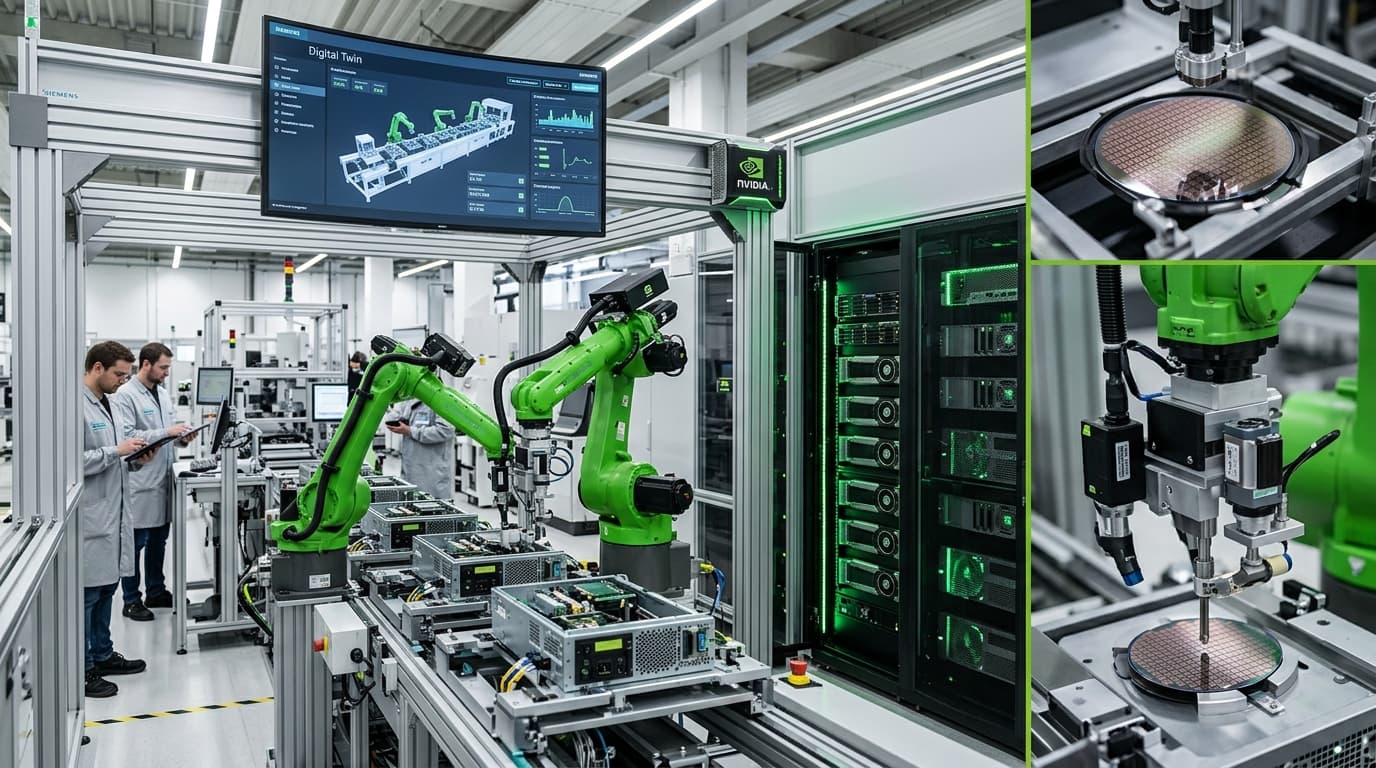
The expanded strategic partnership between Siemens and NVIDIA is centered on the ambitious goal of creating a comprehensive 'Industrial AI Operating System.' This system is envisioned as the backbone for fully AI-driven, adaptive manufacturing sites, integrating advanced AI capabilities directly into every facet of factory operations. It represents a convergence of cutting-edge AI infrastructure with deep industrial domain expertise, aiming to unlock unprecedented levels of efficiency, flexibility, and innovation.
By combining NVIDIA's leadership in AI computing, simulation platforms, and software with Siemens' extensive portfolio of industrial automation software and operational technology, the collaboration seeks to build a robust, scalable, and secure framework. This operating system will enable manufacturers to deploy AI models for tasks ranging from predictive maintenance and quality control to robotic automation and dynamic production scheduling, all within a unified and intelligent environment.
Erlangen: Europe's Blueprint for AI Factories
A cornerstone of this groundbreaking initiative is the designation of the Siemens Electronics Factory in Erlangen, Germany, as the first blueprint for implementing this Industrial AI Operating System. Slated for implementation starting in 2026, Erlangen will serve as a living laboratory, demonstrating the practical application and benefits of fully AI-driven adaptive manufacturing. This strategic choice positions Germany, and by extension Europe, at the forefront of advanced industrial automation.
The Erlangen pilot is more than just a testbed; it's intended to be a scalable model for future AI-powered factories globally. Its success will provide crucial insights and validated methodologies for businesses across Europe, including those in dynamic innovation hubs like Barcelona, looking to adopt similar intelligent, adaptive factory systems. The lessons learned from Erlangen will inform best practices for integrating physical AI deeply into manufacturing operations, offering a clear pathway for others to follow.
Technological Synergy and 'Physical AI'
The essence of this partnership lies in the powerful synergy between NVIDIA's advanced AI infrastructure, including its Omniverse platform for industrial metaverse applications and AI models, and Siemens' deep expertise in industrial software, automation, and operational technology. NVIDIA's capabilities provide the computational power and simulation environments necessary to train, validate, and deploy complex AI models, while Siemens contributes the real-world industrial context, control systems, and integration know-how.
This collaboration embodies the growing trend of 'physical AI,' where artificial intelligence moves beyond software applications to directly influence and control physical processes in real-time. From intelligent robots that learn and adapt to dynamic factory layouts to AI-powered sensors that predict equipment failures before they occur, the Industrial AI Operating System will facilitate a new era of autonomous and self-optimizing manufacturing. This integration was a key theme at recent industry events, highlighting the industry's shift towards more intelligent and resilient production.
- Indicative distribution of key components within a conceptual Industrial AI Operating System.
Strategic Implications for European Industry
This Siemens-NVIDIA initiative holds profound strategic implications for the European industrial landscape. By establishing a leading-edge blueprint in Germany, the partnership is setting a new benchmark for manufacturing excellence and technological innovation across the continent. European businesses, particularly those in high-value manufacturing sectors, will closely watch the Erlangen pilot for scalable solutions and best practices that can be adapted to their own operations.
For regions like Catalonia and cities such as Barcelona, which boast a vibrant industrial base and a growing tech ecosystem, this development offers a crucial opportunity to accelerate their own digital transformation journeys. The adoption of intelligent, adaptive factory systems can significantly boost competitiveness, foster local innovation, and create new high-skilled employment opportunities. Understanding and preparing for these shifts is paramount for maintaining a leading edge in global manufacturing.
Assessing Your Factory's AI Readiness
As the industrial world moves towards AI-driven adaptive manufacturing, businesses must critically evaluate their current capabilities and readiness for this transformation. Embracing an Industrial AI Operating System requires not only technological investment but also a strategic reorientation of operational processes, workforce skills, and data governance. Companies that proactively assess their readiness will be better positioned to capitalize on the efficiencies and resilience offered by advanced AI.
Key areas for self-assessment include the maturity of existing automation infrastructure, the availability and quality of operational data, the digital literacy of the workforce, and the strategic vision for AI integration. Understanding these factors is the first step towards developing a tailored roadmap for adopting intelligent manufacturing practices, ensuring a smooth transition and maximizing the return on AI investments.
How mature is your factory's current automation infrastructure?
The Future of Resilient Manufacturing
The collaboration between Siemens and NVIDIA is more than just a technological advancement; it's a strategic move towards building a more resilient, efficient, and sustainable future for manufacturing. By enabling factories to become truly adaptive, responsive to real-time data, and capable of self-optimization, the Industrial AI Operating System promises to mitigate supply chain vulnerabilities, reduce waste, and accelerate innovation cycles.
This vision of fully AI-driven manufacturing sites will not only transform production floors but also redefine competitive advantages in the global economy. For businesses in Barcelona and across Europe, embracing these intelligent systems will be crucial for long-term growth, fostering a new era of industrial prosperity driven by the intelligent integration of physical and digital worlds.
“This collaboration marks a pivotal shift towards fully adaptive manufacturing, offering a scalable blueprint for industrial AI adoption across Europe.”