Context of Intelligent Automation
The modern enterprise constantly seeks avenues for greater efficiency and innovation. In this pursuit, intelligent automation, powered by Artificial Intelligence, has emerged as a critical driver. However, the complexity of developing and integrating sophisticated AI solutions often presents a significant barrier for many organizations, particularly those without extensive in-house technical expertise. The demand is growing for tools that can democratize AI development, making it accessible to a broader range of business users and developers.
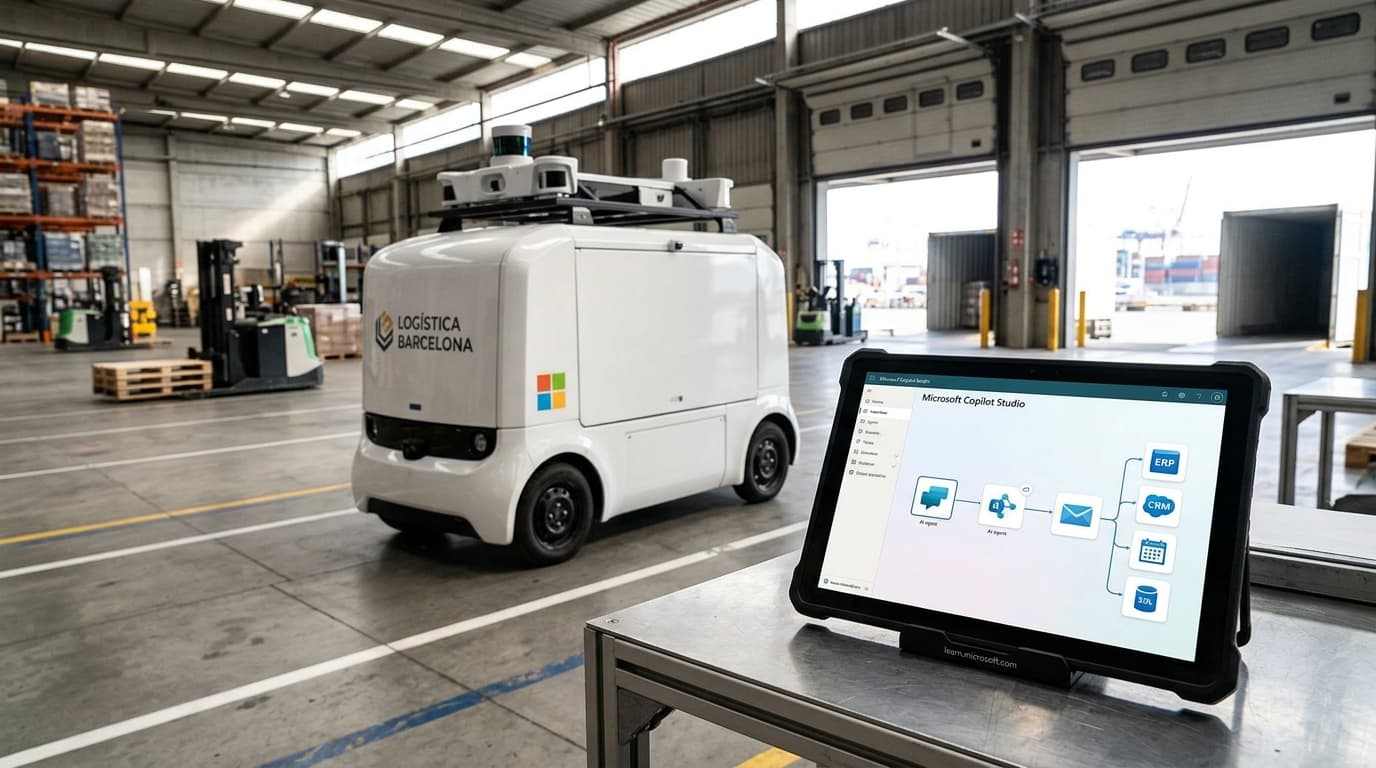
Microsoft has been at the forefront of this movement, and its Copilot Studio platform is designed precisely to bridge this gap. As a low-code, graphical platform, it aims to empower businesses to build and manage AI-powered agents and workflows with relative ease. The latest enhancements to Copilot Studio represent a significant leap forward, focusing on making these AI agents more capable, autonomous, and seamlessly integrated into complex enterprise operations.
Key Enhancements in Copilot Studio
Microsoft's recent updates to Copilot Studio are strategically designed to strengthen the core capabilities of AI agents. A primary focus has been on improving the agents' ability to follow instructions and execute complex, multi-step tasks more consistently and reliably in real-world business scenarios. This means agents can now handle more intricate processes, reducing the need for constant human oversight and intervention, thus boosting operational resilience.
Furthermore, the platform now boasts an improved orchestrator, specifically tailored for handling intricate agentic processes. This orchestrator, coupled with new workflow design functions, provides developers with greater control and flexibility in mapping out complex automation sequences. Developers can create custom agents capable of interacting with a wide array of external systems, thanks to the availability of both prebuilt and custom connectors. This connectivity is crucial for enabling agents to gather information, trigger actions, and update records across disparate business applications.
The Power of Custom AI Agents
The true power of these enhancements lies in their ability to enable the creation of highly customized AI agents. Businesses are no longer confined to generic automation templates; instead, they can design agents that precisely fit their unique operational needs and strategic objectives. This low-code approach significantly lowers the entry barrier for AI development, allowing citizen developers and business analysts, alongside professional developers, to contribute to the creation of sophisticated AI solutions. The new agent-building experience simplifies configurations, presenting instructions, skills, tools, and knowledge in a single, intuitive interface, fostering rapid prototyping and deployment.
These enhanced agents are not merely reactive tools; they are designed to proactively participate in shared business processes. Imagine an agent that can autonomously manage parts of an employee onboarding process, from initiating IT provisioning to scheduling introductory meetings, or one that coordinates complex project meetings across multiple departments and time zones. This proactive engagement transforms the role of automation from simple task execution to intelligent, collaborative participation in core business operations, paving the way for truly autonomous enterprise workflows.
- These figures are indicative of potential distribution and do not represent actual statistical data.
Impact on Enterprise Digital Transformation
The evolution of Microsoft Copilot Studio signifies a pivotal shift in the landscape of enterprise digital transformation. It moves beyond traditional Robotic Process Automation (RPA), which often focuses on automating repetitive, rule-based tasks, towards a more adaptive and interconnected system of intelligent agents. These agents can interpret context, make decisions, and learn from interactions, enabling them to tackle more ambiguous and dynamic processes that were previously beyond the scope of conventional automation.
This development fosters a more agile and responsive business environment. Enterprises can rapidly adapt to changing market conditions by quickly deploying or modifying AI agents to handle new challenges or opportunities. The ability to integrate these agents with existing enterprise systems through robust connectors ensures that AI-driven automation becomes an intrinsic part of the digital fabric, rather than an isolated layer, driving holistic improvements across the entire value chain.
Opportunities for European and Barcelona Businesses
For European and particularly Barcelona-based businesses, these advancements in Copilot Studio present a compelling opportunity. The emphasis on low-code development is especially relevant in a region where innovation often thrives on agility and resourcefulness. Local companies, from startups to established enterprises, can now leverage these powerful tools to build tailored, autonomous AI solutions without the need for extensive, costly technical expertise or hiring large teams of AI specialists.
This democratized access to advanced AI capabilities enables businesses in Barcelona to address specific local market demands, optimize operations in line with European regulatory frameworks, and foster innovation within their unique enterprise contexts. By adopting these solutions, companies can enhance their operational efficiency, improve customer experiences, and gain a competitive edge in both local and international markets, contributing to the region's broader digital economy and technological leadership.
Does your company face bottlenecks in repetitive or multi-step processes?
Strategic and Operational Implications
Strategically, the deployment of enhanced AI agents through Copilot Studio allows businesses to reallocate human capital from mundane, repetitive tasks to more strategic, creative, and value-added activities. This not only boosts employee satisfaction but also unlocks new avenues for innovation. Operationally, the benefits are tangible: reduced error rates, faster processing times, improved data accuracy, and enhanced decision-making capabilities due to consistent execution of complex workflows.
Consider the impact on internal processes. Employee onboarding, a notoriously complex and multi-departmental process, can be significantly streamlined by an AI agent coordinating tasks across HR, IT, and departmental managers. Similarly, coordinating meetings, managing project timelines, or even handling initial customer service inquiries can be automated, freeing up human staff to focus on more nuanced and empathetic interactions. This shift leads to a more efficient, agile, and ultimately more profitable enterprise.
The Future of AI-Powered Automation
The trajectory set by Microsoft Copilot Studio points towards a future where AI agents are not just tools but integral, intelligent participants in the daily rhythm of business. As these platforms continue to evolve, we can anticipate agents becoming even more autonomous, capable of self-learning, adapting to new scenarios, and even proactively identifying opportunities for process improvement without explicit programming. The focus will increasingly shift towards defining high-level objectives rather than detailed instructions, with agents filling in the operational gaps.
This evolution will necessitate a thoughtful approach to governance, ethics, and human-AI collaboration. Ensuring transparency in agent decision-making, establishing clear accountability, and continuously upskilling human workforces to collaborate effectively with AI will be paramount. Ultimately, these advancements promise a future where businesses can achieve unprecedented levels of operational efficiency and innovation, driven by a symbiotic relationship between human ingenuity and intelligent automation.
“The platform democratizes AI agent creation, enabling businesses to innovate without deep technical expertise.”