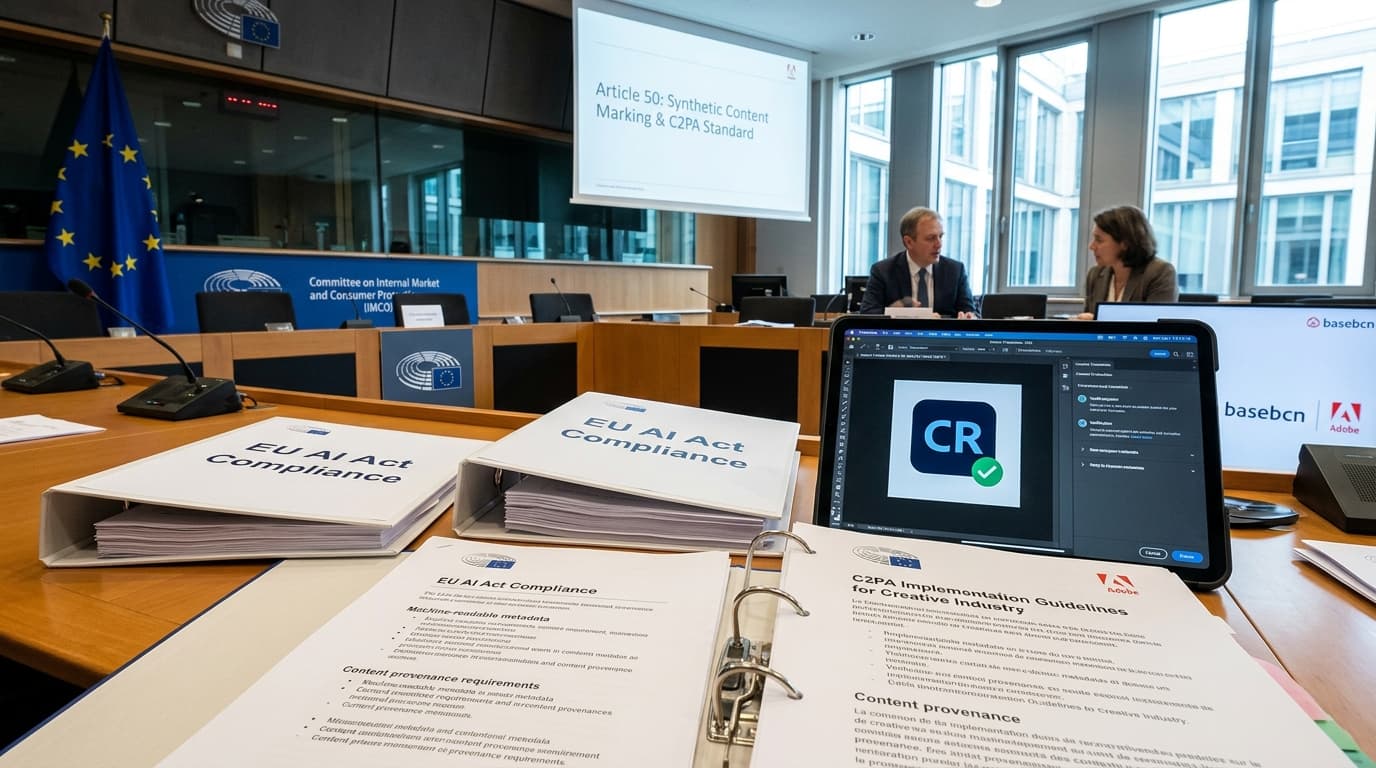
The new draft guidelines
The European Union's Artificial Intelligence Act stands as a pioneering regulatory framework globally, aiming to foster the development and adoption of trustworthy, human-centric AI. For businesses operating within or collaborating with European markets — particularly those in dynamic tech hubs like Barcelona — understanding and adapting to this evolving legislation is paramount.
On May 19, 2026, the European Commission took a significant step by publishing draft guidelines on the classification of high-risk AI systems under the EU AI Act. These guidelines, now open for public consultation until June 23, 2026, are crucial for providing clarity on how companies should identify and categorize their AI applications.
This move follows closely on the heels of a provisional agreement reached on May 7, 2026, on the Digital Omnibus on AI, which introduces several key amendments to the AI Act, notably a series of staggered deferrals for compliance deadlines.
Risk classification, visualised
The AI Act classifies systems by their potential to cause harm. Click any tier to see what it covers.
High risk
Allowed but heavily regulated — risk assessments, data governance, human oversight, transparency, and conformity assessment before market.
- CV-screening / hiring AI
- Credit scoring & creditworthiness
- AI in medical devices
- AI in critical infrastructure
- Education admissions / grading
Deferrals & new deadlines
The deferrals introduced by the Digital Omnibus represent a strategic adjustment designed to provide businesses with more time to adapt to the comprehensive requirements of the AI Act.
Transparency obligations for certain AI systems under Article 50(2) are now deferred from August 2, 2026 to December 2, 2026. These extensions, coupled with the detailed classification guidelines, reflect the EU's commitment to a balanced implementation that supports innovation while upholding safety and ethical standards.
Obligations for Annex III HRAIS have been postponed from August 2, 2026 to December 2, 2027 — a sixteen-month window to get compliance right.
Interactive timeline
Toggle between the original deadlines and the amended ones to see where each key obligation now sits.
Impact on the AI industry
These developments will have a profound impact across the AI industry. The clearer guidance on high-risk classification empowers developers and deployers to design and implement AI systems with compliance built-in from the outset, reducing future friction and potential rework.
The extended timelines are particularly beneficial, allowing organizations to conduct thorough internal audits, refine their AI governance frameworks, and invest in the necessary technical and organizational measures to meet the Act's stringent requirements.
Is your AI system high-risk?
A 4-question heuristic based on Annex III. Not legal advice — but a useful starting point.
Does your AI system fall into any Annex III use case?
Why Barcelona benefits
For tech hubs like Barcelona, a burgeoning center for AI innovation and digital transformation, these regulatory adjustments are particularly relevant. Local startups, scale-ups, and established enterprises developing or integrating AI solutions will find the clearer guidance invaluable in navigating the complexities of the Act.
Furthermore, the postponement of the obligation for EU Member States to establish at least one national AI regulatory sandbox — from August 2, 2026 to August 2, 2027 — offers a more realistic timeframe for Spain and Catalonia to set up these crucial innovation environments.
“The sandbox postponement is not a delay — it's a runway.”
What businesses should do now
From a business perspective, the current period presents a critical opportunity. Companies are strongly encouraged to actively participate in the public consultation on the draft guidelines, contributing to the final shape of the classification framework.
Concurrently, they should leverage the extended compliance deadlines to conduct comprehensive reviews of their AI portfolios, assess potential high-risk classifications, and develop robust internal compliance strategies. Adopting a proactive stance is a strategic investment that enhances trust, mitigates risks, and positions businesses as leaders in ethical AI.
Looking ahead
The recent advancements in the EU AI Act's implementation — clearer high-risk classification guidelines and adjusted timelines — underscore Europe's dedication to leading the global conversation on responsible AI. These measures aim to create a more predictable and supportive environment for innovation.
For the vibrant AI community in Barcelona and across Europe, embracing these changes proactively will be key to unlocking the full potential of AI while ensuring its development aligns with societal values and ethical principles.